Gears of Trade
India and the European Union have taken a significant step forward in their long running negotiations for a comprehensive free trade agreement, with both sides signalling progress on reducing tariffs on automobiles. The proposed deal, which would gradually lower India’s high import duties on European cars, has the potential to reshape trade relations between the two economies and alter the dynamics of India’s domestic automotive industry.
At present, India imposes some of the world’s steepest tariffs on imported vehicles, with duties ranging from 60 to over 100 per cent depending on engine size and vehicle value. These measures have long been a major obstacle for European carmakers such as Volkswagen, BMW and Mercedes Benz, who have argued that such tariffs make their vehicles prohibitively expensive for Indian consumers. The European Union has consistently pushed for substantial tariff reductions, viewing the Indian market as one of the few major growth opportunities left for the global automotive sector.
Under the emerging framework of the trade deal, India is expected to agree to phased tariff cuts on cars imported from the EU. Rather than an immediate and drastic reduction, the proposal centres on a gradual approach that would allow domestic manufacturers time to adjust. This structure reflects India’s broader trade strategy, which seeks to balance market openness with the protection of local industry and employment.
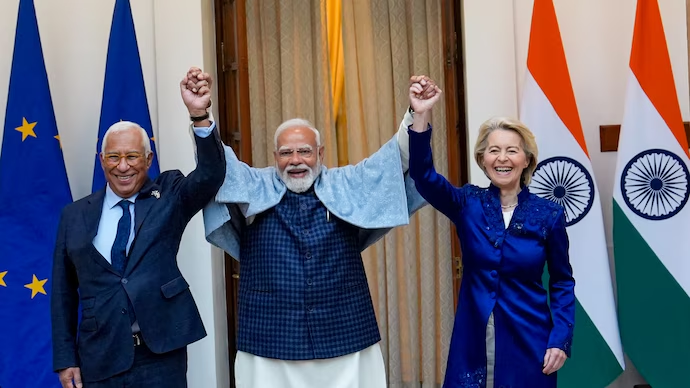
For the European Union, the agreement represents more than just improved access for car exports. Brussels sees the deal as part of a wider effort to strengthen economic ties with India at a time when global trade is becoming increasingly fragmented. With supply chains being restructured and geopolitical uncertainties affecting commerce with other major partners, India’s large and growing consumer market is of strategic importance to Europe.
From India’s perspective, the negotiations are more complex. The domestic automobile industry is a major employer and a flagship of the country’s manufacturing ambitions under the Make in India initiative. Indian carmakers have historically relied on tariff protection to compete against foreign brands. Concerns remain that cheaper European imports could put pressure on domestic producers, particularly in the premium and electric vehicle segments.
However, proponents of the deal argue that tariff cuts could have positive spillover effects for India’s economy. Increased competition may encourage domestic manufacturers to improve quality, safety and technological sophistication. European firms could also expand local manufacturing and investment to take advantage of the larger market, bringing with them advanced engineering and cleaner technologies. This could be particularly relevant as India accelerates its transition towards electric mobility and stricter emissions standards.
The issue of electric vehicles has emerged as a sensitive point in the talks. European manufacturers are keen to export electric cars to India, while Indian policymakers are cautious about undermining domestic EV production at an early stage of development. As a result, negotiators are exploring differentiated tariff schedules that could treat electric vehicles separately or include localisation requirements over time.
The car tariff discussions are part of a much broader trade package that includes services, intellectual property, sustainability standards and labour issues. Talks between India and the EU resumed in 2022 after nearly a decade of stagnation, reflecting renewed political will on both sides. While progress has been uneven, the apparent convergence on automobiles suggests that compromises are possible on even the most contentious issues.
Critics of the deal within India warn that lowering tariffs too quickly could widen the trade deficit and reduce government revenue. Import duties on cars are a significant source of income for the exchequer. Any reduction would need to be offset by gains elsewhere, such as increased investment, export growth or higher tax receipts from expanded economic activity.

For consumers, the potential benefits are clearer. Reduced tariffs could lower the prices of imported European cars, making them more accessible to India’s expanding middle and upper middle classes. This could also raise expectations around safety features and environmental performance across the market, influencing domestic offerings.
While the final contours of the agreement are yet to be settled, the momentum around car tariff cuts highlights the pragmatic turn in India EU trade relations. Both sides appear willing to move beyond entrenched positions in pursuit of longer term strategic and economic gains. If successfully concluded, the deal could mark a new phase in India’s engagement with advanced economies, signalling a cautious but meaningful opening of one of its most protected sectors.
Ultimately, the outcome will depend on how effectively negotiators balance domestic sensitivities with the opportunities offered by deeper integration. The car tariff issue, once seen as an insurmountable barrier, may now become the symbol of a broader compromise shaping the future of India EU trade.