God, Guns, and Distraction
Updated: Jun 18, 2025
Disclaimer: The views expressed in this article are those of the author and do not necessarily reflect/represent the views of the editorial board of Economicity.
India in 2025 stands at a turning point, but not one that imagines progress or unity. What we observe is a crisis of religious division that splits communities apart, taking people's attention away from the government's clear shortcomings. The government's tightening grip on Hindu temples, along with the recent military Operation Sindoor against Pakistan, are not separate incidents but parts of a bigger plan to manipulate politics. The question isn’t just whether religious tensions exist; they do, as they always have, but whether those tensions are being stoked on purpose to serve a political agenda. Spoiler alert: they are.
Let’s start with the obvious: religious divisiveness in India is a deliberately created chaos, not an unplanned blast of historical hatred. Look around, divisive floods media channels, politicians use communal dog whistles, and government policies subtly favour one religion while sidelining others. This isn’t about “protecting culture” or “national security.” It’s about creating an enemy within, a scapegoat for the government’s spectacular mismanagement of everything from the economy to public health.

Remember, while inflation soars, jobs vanish, and farmers continue to suffer, the focus is shifted onto communal headlines. The “enemy” is no longer poverty or corruption but a religious “other.” Who benefits? Not the average citizen drowning in hardship. The beneficiaries are the political elites who exploit identity politics to hang onto power, and the big business interests aligned with them, who thrive when social cohesion collapses.
Now, this created polarisation isn’t just limited to show-off speeches and social media. The government’s increasing control over Hindu temples is a huge example of how religion is weaponised for political gain. Temples, which should be independent centres of faith, are becoming extensions of the state apparatus. Temple boards, many controlled by politicians, manage vast resources and funds. This allows the ruling party to funnel money, reward loyalty, and promote an ideological agenda under the guise of religious devotion.

The Vishwa Hindu Parishad and other Hindu nationalist groups criticise this “state control” over temples, claiming it diminishes religious freedom, but this criticism misses the point; the state’s involvement is purposeful. By controlling temples, the government can rewrite religious ideologies, glorify selected histories, and promote Hindu majoritarianism while marginalising minority communities. This isn’t faith; it’s faith-politics fusion made to hold power through religious nationalism.
Then comes Operation Sindoor, India’s recent military strike on Pakistan, named after a Hindu symbol of marital status. The symbolism is not normal, trying to make this a part of our “culture, traditions or ethos.” The operation was announced with great fanfare, dominating headlines and showcasing nationalist emotion, but one must ask: why launch such an aggressive military campaign now? Certainly, the Pahalgam terror attack was horrific and demanded a response. Yet, the operation’s timing conveniently covered up a series of domestic crises like inflation, growing unemployment, and unfulfilled promises of development.
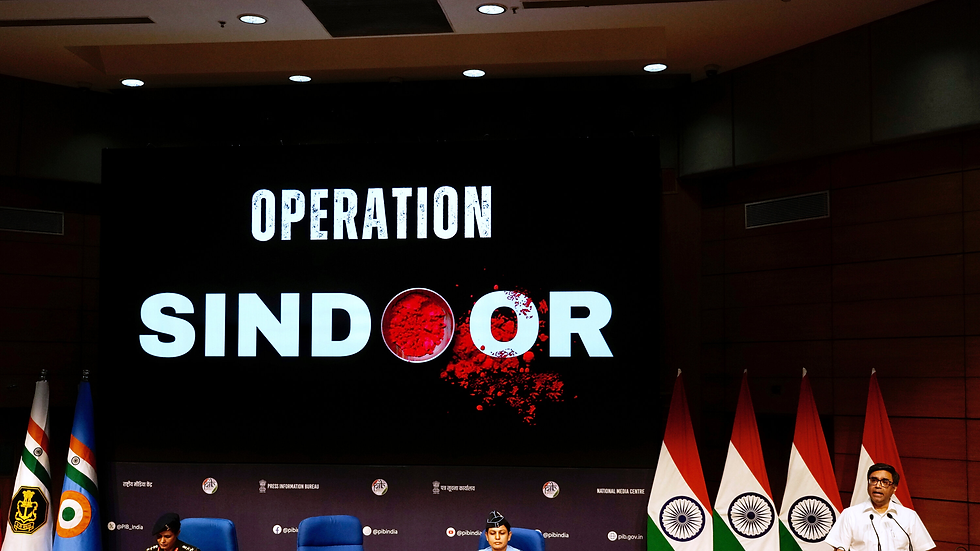
By covering the military action in religious symbolism, the government cleverly activated its major supporters, presenting itself as the defender of “Hindu”. It diverts attention from internal dissent and governance failures by diverting the population around an external “enemy.” This political theatre uses war as a tool not just of national defence but of internal control.
But here's what the reality is: the government exploits religious divisions and nationalist tensions for political gain while making social rifts in India even wider. People from minority faiths deal with so much hate and are left out of the system constantly and probably deliberately. Trust between communities breaks down, violence between groups goes up, and the secular nature of India, which its constitution promises, starts to fall apart scarily, and now it's a constant cycle.

It’s easy to blame “ancient animosity” or “deep-rooted cultural differences” for these tensions, but the reality is far uglier. The government’s deliberate poking of religious polarization, its politicization of temples, and the religious branding of military operations like Sindoor are strategies, strategies to distract from genuine issues.
So, who is truly benefiting? Definitely not the citizens burdened with daily struggles. The real winners are political elites who have their grip on power by dividing the people. It’s a game that sacrifices India’s unity and secular democracy for short-term electoral gain.
If India is to progress, this created chaotic crisis must be exposed. The government must be held accountable for using religion as political propaganda. Temples should remain sacred spaces, free from state control and political agendas. Military actions must be transparent and called by genuine security needs, not power plans.
India’s strength lies in its diversity, not its divisions. Religious polarisation is a crisis, yes, but one created, taken care of, and exploited by those in power. To look away is to accept a future where democracy is hollow, and communal hatred is the new normal or really just normal.