The Referee of Indian Politics
In India, the Election Commission is like the referee of a never-ending cricket match. It runs the biggest election in the world, making sure nearly a billion people get to vote, and somehow the game doesn’t collapse into chaos. The United Nations once called Indian elections “a miracle in motion” and yet, every few years, the same Commission that makes this miracle possible is accused of being biased, silent, or weak, usually by whoever just lost the match.
Rahul Gandhi has recently made the Commission one of his favorite talking points. He says it stays quiet when hate speech spreads, or when governments use unfair means in elections. These are serious allegations, but they show us the exact pattern which is as old as Indian politics itself which is, whichever party is losing calls the umpire unfair, and whichever party is winning praises the same umpire as independent.
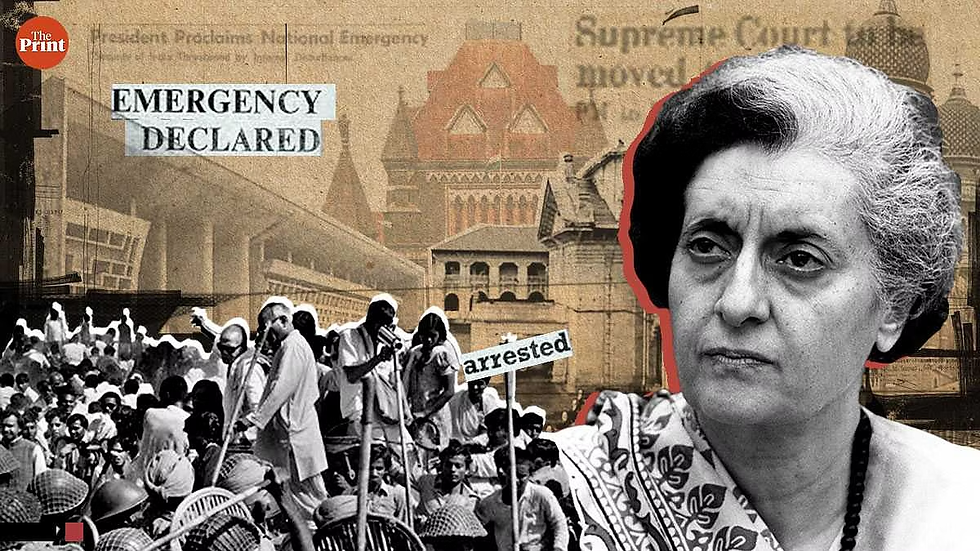
History shows us this is nothing new. During the Emergency in 1975, when civil rights were suspended and newspapers censored, the Election Commission did not stop. A decade later, in the 1987 Jammu and Kashmir elections, rigging was so obvious that many people say it directly led to militancy in the Valley. In 1984, elections were held just after Indira Gandhi’s assassination and the anti-Sikh riots and then came T. N. Seshan in the 1990s, a Chief Election Commissioner who turned the Commission into a real force. He cancelled polls if violence broke out, stopped booth capturing, and told politicians that the Model Code of Conduct actually meant something. The same platform that looked weak and incapable in the Emergency suddenly became fearless and capable.
Rahul Gandhi’s criticism, then, is not wrong, the Commission today seems like it's taking precautions and is cautious. It struggles with hate speech, and it is slow when it comes to dealing with fake news online. A 2019 report by the Association for Democratic Reforms showed that one in four candidates contesting had serious criminal cases against them, and the Commission couldn’t do much more than issue notices but opposition sometimes talks as if this problem is new under the BJP, when in reality it has been there all along.
Take Electronic Voting Machines. In 2009, when the Congress was in power, the UPA government told the Supreme Court that EVMs were safe and admired worldwide but in 2019, after the BJP’s big win, the same machines were called compromised and when Congress won in Himachal Pradesh, Karnataka, and Telangana from 2022–23, the machines suddenly became fair again. The machines don’t change, the politicians’ stories do.
Appointments are another example. Many say the government has too much control over who becomes an Election Commissioner. Even the Supreme Court has suggested a better system is needed but if this has always been such a big flaw, why didn’t the Congress change it when they had strong majorities in Parliament? They had decades to reform it, yet never tried. The demand only seems to matter once they are sitting in the opposition.
Meanwhile, the Commission just keeps doing its job, quietly and without much drama. In the 2024 elections, it seized over ₹8,000 crore worth of illegal money, liquor, and freebies. These raids affected both BJP and opposition candidates. If everyone is angry at the referee, maybe that means the referee is doing their job.

Voter turnout also tells us something important. In 2009, about 58 percent of Indians voted. By 2019, it was 67 percent, the highest ever, and in many states, women voted in larger numbers than men. Independent groups from Europe and America who observed our elections still call them free and fair. If the Commission was truly broken, would people still stand in line for hours in the summer heat to cast their vote?
It was weak under Indira Gandhi, questioned under Rajiv, challenged under Vajpayee, trusted under Manmohan Singh, and attacked under Modi and yet, through all this, it has kept conducting elections, and Indians have kept showing up to vote.

Rahul Gandhi’s questions about the ECI are valid, but his outrage is not new. It is part of a long tradition that whoever loses calls the Commission biased, whoever wins calls it fair. The deeper truth is that the ECI has survived booth capturing in Bihar, militancy in Punjab, riots in Gujarat and Delhi, and now the age of WhatsApp forwards and deepfakes, basically has been accused of bias by every party, but it has outlasted them all.
Maybe that is the real lesson here. The Election Commission is less a perfect institution and more a mirror of our politics, always doubted, always blamed, but still trusted enough by ordinary people to keep India’s democracy moving.

Disclaimer: The views expressed in this article are those of the author and do not necessarily reflect/represent the views of the editorial board of Economicity.